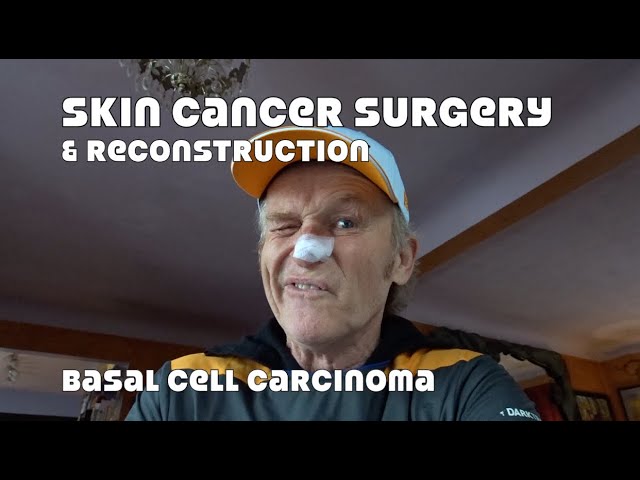
Beginning skin cancer on the nose, known as basal cell carcinoma (BCC), is a common type of skin cancer that affects the basal cells, which are the lowest layer of the epidermis. A small, pearly or waxy bump that persists for more than a few weeks may be an early sign of BCC.
Early detection and treatment of BCC is crucial to prevent it from spreading and causing more severe damage. Understanding the symptoms and risk factors associated with BCC can help individuals take preventive measures and seek prompt medical attention if necessary.
In this article, we will delve into the causes, symptoms, risk factors, and effective treatment options for beginning skin cancer on the nose, providing valuable information for readers concerned about this prevalent condition.
Beginning Skin Cancer on Nose
Understanding the essential aspects of beginning skin cancer on the nose is crucial for early detection, effective treatment, and prevention of further complications.
- Causes
- Symptoms
- Risk Factors
- Diagnosis
- Treatment Options
- Prevention
- Prognosis
- Complications
These aspects provide a comprehensive overview of beginning skin cancer on the nose, encompassing its origins, clinical presentation, predisposing factors, methods of detection, management strategies, preventive measures, potential outcomes, and associated complications. Understanding these aspects empowers individuals to make informed decisions regarding their health and well-being.
Causes
The primary cause of beginning skin cancer on the nose is prolonged exposure to ultraviolet (UV) radiation from the sun or artificial sources, such as tanning beds. UV radiation damages the DNA in skin cells, leading to mutations that can cause the cells to grow uncontrollably and form a tumor. Fair-skinned individuals, those with a history of sunburns, and those who spend extended periods outdoors are at an increased risk of developing skin cancer on the nose.
Other risk factors for beginning skin cancer on the nose include a weakened immune system, a family history of skin cancer, and certain genetic conditions. Additionally, certain occupations, such as construction workers and farmers, who are exposed to high levels of UV radiation, have an increased risk of developing skin cancer on the nose.
Understanding the causes of beginning skin cancer on the nose is crucial for prevention. Individuals can take steps to reduce their risk by limiting sun exposure, using sunscreen, and wearing protective clothing. Early detection and treatment are also essential for successful outcomes.
Symptoms
Recognizing the symptoms of beginning skin cancer on the nose is crucial for timely diagnosis and treatment. Common symptoms include a small, pearly or waxy bump that persists for more than a few weeks, a flat, reddish patch that may crust or bleed, and a sore that does not heal.
-
Appearance
BCCs typically appear as small, pearly or waxy bumps on the nose. They may also appear as flat, reddish patches or sores that do not heal.
-
Location
BCCs most commonly occur on sun-exposed areas of the nose, such as the bridge or tip.
-
Size
BCCs can vary in size from a few millimeters to several centimeters.
-
Growth
BCCs typically grow slowly over weeks or months.
Understanding the symptoms of beginning skin cancer on the nose empowers individuals to take proactive steps towards early detection and treatment. If you notice any suspicious lesions or changes on your nose, it is essential to consult a healthcare professional for prompt evaluation and appropriate management.
Risk Factors
Understanding the risk factors associated with beginning skin cancer on the nose is essential for developing effective preventive strategies and promoting early detection. Risk factors are characteristics or exposures that increase the likelihood of developing a disease, and they play a crucial role in the development of skin cancer on the nose.
The primary risk factor for beginning skin cancer on the nose is prolonged exposure to ultraviolet (UV) radiation from the sun or artificial sources, such as tanning beds. UV radiation damages the DNA in skin cells, leading to mutations that can cause the cells to grow uncontrollably and form a tumor. Individuals who spend extended periods outdoors, have a history of sunburns, or have fair skin are at an increased risk of developing skin cancer on the nose.
Other risk factors for beginning skin cancer on the nose include a weakened immune system, a family history of skin cancer, and certain genetic conditions. Additionally, certain occupations, such as construction workers and farmers, who are exposed to high levels of UV radiation have an increased risk of developing skin cancer on the nose.
Identifying and mitigating risk factors for beginning skin cancer on the nose is crucial for prevention. Individuals can take steps to reduce their risk by limiting sun exposure, using sunscreen, and wearing protective clothing. Early detection and treatment are also essential for successful outcomes.
Diagnosis
Accurate and timely diagnosis is crucial for effective management of beginning skin cancer on the nose. A thorough medical history and physical examination are essential for diagnosis. During the examination, the healthcare professional will assess the size, shape, color, and texture of the lesion. They may also use a dermatoscope, which is a magnifying device that allows for closer examination of the skin.
In some cases, a biopsy may be necessary to confirm the diagnosis. A biopsy involves removing a small sample of tissue from the lesion for examination under a microscope. This helps to determine the type of skin cancer and its stage of development. Early diagnosis is essential for successful treatment and prevention of further complications.
Understanding the connection between diagnosis and beginning skin cancer on the nose highlights the importance of regular skin self-examinations and prompt medical attention for any suspicious lesions. Early detection and diagnosis can significantly improve treatment outcomes and reduce the risk of more severe complications.
Treatment Options
Treatment options for beginning skin cancer on the nose vary depending on the size, location, and stage of the cancer. The goal of treatment is to remove the cancer cells while preserving as much healthy tissue as possible. Treatment options include surgical excision, Mohs micrographic surgery, radiation therapy, and topical chemotherapy.
-
Surgical excision
Surgical excision is the most common treatment for beginning skin cancer on the nose. The surgeon will remove the cancer cells and a small margin of healthy tissue around the cancer. -
Mohs micrographic surgery
Mohs micrographic surgery is a specialized technique that allows the surgeon to remove the cancer cells while preserving as much healthy tissue as possible. The surgeon will remove the cancer cells in thin layers and examine each layer under a microscope to ensure that all of the cancer cells have been removed. -
Radiation therapy
Radiation therapy uses high-energy X-rays to kill cancer cells. Radiation therapy may be used to treat beginning skin cancer on the nose that is located in a difficult-to-reach area or that has spread to nearby lymph nodes. -
Topical chemotherapy
Topical chemotherapy involves applying a chemotherapy medication directly to the cancer cells. Topical chemotherapy may be used to treat beginning skin cancer on the nose that is small and has not spread to other areas of the body.
The choice of treatment option for beginning skin cancer on the nose will depend on a number of factors, including the size, location, and stage of the cancer, as well as the patient's overall health. It is important to discuss the available treatment options with a doctor to make the best decision for the individual patient.
Prevention
Prevention plays a critical role in mitigating the risk of developing beginning skin cancer on the nose. Given that prolonged exposure to ultraviolet (UV) radiation from the sun is the primary cause of this type of cancer, adopting preventive measures is paramount.
Practical strategies for prevention include limiting sun exposure during peak hours, wearing protective clothing such as hats and long-sleeved shirts, and applying sunscreen liberally to exposed areas of the nose. Sunscreen should have a broad-spectrum SPF of 30 or higher and be reapplied frequently, especially after sweating or swimming. Additionally, avoiding tanning beds is essential as they emit high levels of UV radiation, significantly increasing the risk of skin cancer.
The connection between prevention and beginning skin cancer on the nose is evident in real-life examples. Individuals who consistently practice sun-protective behaviors have a lower risk of developing this type of cancer compared to those who do not. Moreover, studies have shown that regular use of sunscreen can significantly reduce the incidence of skin cancer on the nose, highlighting the practical significance of preventive measures.
In summary, prevention is a vital component of the fight against beginning skin cancer on the nose. By understanding the link between sun exposure and skin cancer, and by implementing preventive measures, individuals can significantly reduce their risk of developing this common type of cancer.
Prognosis
The prognosis for beginning skin cancer on the nose is generally good with early detection and proper treatment. Prognosis refers to the predicted course and outcome of a disease and is influenced by several factors.
-
Stage of the cancer
The stage of the cancer at the time of diagnosis is a key prognostic factor. Early-stage cancers that are confined to the epidermis (the outermost layer of skin) have a better prognosis than advanced-stage cancers that have spread to deeper layers of the skin or to other parts of the body.
-
Type of skin cancer
The type of skin cancer also affects the prognosis. Basal cell carcinoma (BCC) is the most common type of skin cancer on the nose and has a very good prognosis with early detection and treatment. Squamous cell carcinoma (SCC) is a more aggressive type of skin cancer that can spread to other parts of the body if not treated promptly.
-
Location of the cancer
The location of the cancer on the nose can also affect the prognosis. Cancers that are located on the tip or bridge of the nose have a better prognosis than cancers that are located on the side of the nose or near the eye.
-
Overall health of the patient
The overall health of the patient can also affect the prognosis. Patients with a weakened immune system or other health conditions may have a poorer prognosis than healthy patients.
Prognosis is an important consideration for patients with beginning skin cancer on the nose. By understanding the factors that affect prognosis, patients can make informed decisions about their treatment options and follow-up care.
Complications
Complications from beginning skin cancer on the nose can arise if left untreated or inadequately managed. The primary complication is the potential for the cancer to spread to other parts of the body, including the lymph nodes and other organs. Advanced stages of skin cancer can lead to significant tissue damage, disfigurement, and even life-threatening consequences.
Another potential complication is the development of recurrent skin cancer in the same area. This can occur if the initial treatment was not successful in removing all of the cancer cells. Recurrent skin cancer may be more difficult to treat and may require more aggressive treatment methods.
Understanding the complications associated with beginning skin cancer on the nose is crucial for emphasizing the importance of early detection and prompt treatment. By recognizing the potential consequences of neglecting this condition, individuals can be motivated to seek medical attention at the earliest signs and symptoms, improving their chances of successful treatment and minimizing the risk of severe complications.
Frequently Asked Questions about Beginning Skin Cancer on Nose
This section addresses common questions and concerns regarding beginning skin cancer on the nose. These FAQs aim to provide concise and informative answers, facilitating a deeper understanding of this condition.
Question 1: What are the early signs of beginning skin cancer on the nose?
Answer: Basal cell carcinoma (BCC), the most common type of skin cancer on the nose, often appears as a small, pearly or waxy bump. It may also present as a flat, reddish patch or a sore that does not heal.
Question 2: What causes beginning skin cancer on the nose?
Answer: Prolonged exposure to ultraviolet (UV) radiation from the sun is the primary cause. Fair-skinned individuals, those with a history of sunburns, and those who spend extended periods outdoors have an increased risk.
Question 3: How is beginning skin cancer on the nose diagnosed?
Answer: Diagnosis involves a medical history, physical examination, and potentially a biopsy, where a small sample of tissue is removed for examination under a microscope.
Question 4: What are the treatment options for beginning skin cancer on the nose?
Answer: Treatment options include surgical excision, Mohs micrographic surgery, radiation therapy, and topical chemotherapy. The choice of treatment depends on factors such as the size, location, and stage of the cancer.
Question 5: Can beginning skin cancer on the nose be prevented?
Answer: Limiting sun exposure, wearing protective clothing, and applying sunscreen can significantly reduce the risk of developing beginning skin cancer on the nose.
Question 6: What is the prognosis for beginning skin cancer on the nose?
Answer: With early detection and appropriate treatment, the prognosis for beginning skin cancer on the nose is generally good. Factors such as the stage of cancer and overall health influence the prognosis.
These FAQs provide essential information about beginning skin cancer on the nose. Understanding these aspects empowers individuals to recognize early signs, seek timely diagnosis, and make informed decisions about treatment and prevention.
In the following section, we will explore advanced skin cancer on the nose, discussing its symptoms, risk factors, and management strategies.
Tips for Preventing and Managing Beginning Skin Cancer on the Nose
Taking proactive measures can significantly reduce the risk of developing beginning skin cancer on the nose and improve outcomes if it does occur.
Tip 1: Limit Sun ExposureAvoid peak sun hours, wear protective clothing, and seek shade whenever possible.Tip 2: Use Sunscreen Regularly
Apply broad-spectrum sunscreen with SPF 30 or higher to exposed areas of the nose, reapplying frequently.Tip 3: Avoid Tanning Beds
Tanning beds emit harmful UV radiation that increases the risk of skin cancer.Tip 4: Examine Your Nose Regularly
Check for any suspicious changes, such as new growths, changes in color or texture, or sores that do not heal.Tip 5: Report Changes to a Healthcare Professional
Seek prompt medical attention if you notice any concerning changes on your nose.Tip 6: Follow Treatment Recommendations
Adhere to the treatment plan prescribed by your doctor to maximize the chances of successful outcomes.Tip 7: Protect Your Nose During Treatment
Use bandages or dressings to cover the treatment area and minimize sun exposure during the healing process.Tip 8: Maintain Regular Follow-Up Appointments
Attend scheduled follow-up appointments to monitor progress and detect any signs of recurrence.
By following these tips, you can proactively protect your nose from the harmful effects of UV radiation, increase your chances of early detection, and improve treatment outcomes for beginning skin cancer on the nose.
In the final section of this article, we will delve into advanced skin cancer on the nose, discussing its symptoms, risk factors, and comprehensive management strategies.
Conclusion
This comprehensive exploration of beginning skin cancer on the nose underscores the crucial importance of early detection and proper management. Understanding the causes, risk factors, and symptoms empowers individuals to take proactive steps towards prevention and early intervention.
Key insights from this article highlight the primary role of prolonged UV exposure in the development of beginning skin cancer on the nose. Additionally, fair skin, a history of sunburns, and a weakened immune system are significant risk factors. Early detection remains paramount, and any suspicious changes on the nose, such as persistent sores or changes in texture, warrant prompt medical attention.
Remember, beginning skin cancer on the nose is highly treatable when detected and managed early. Regular skin self-examinations, sun protection measures, and adherence to treatment recommendations are essential for successful outcomes. By raising awareness and empowering individuals with knowledge, we can collectively reduce the burden of beginning skin cancer on the nose and promote skin health for all.